Property Registration Process in Karnataka 2026
Published 10 Jul 2026 · Last updated 10 Jul 2026
Prices & RERA details verified against the K-RERA portal, July 2026.
Registering your sale deed is the step that legally transfers a property into your name in Karnataka. Until the deed is registered at the sub-registrar office and recorded in the government's books, you are not the recognised owner, however much you have paid. In 2026 most of the groundwork, from paying stamp duty to booking a slot, is done online through the state's Kaveri system, and the appointment at the sub-registrar office is usually a single sitting once your paperwork is in order.
This guide walks through the full registration process in Karnataka: the documents you need, the charges you pay, the step-by-step flow, and the Khata and encumbrance formalities that follow. It is written for a buyer at Bannerghatta Road or anywhere else in the state, and closes with where our project, Godrej Castillo by Godrej Properties, fits. Rules and fees revise periodically, so confirm the current position with the sub-registrar before you register.
Karnataka Registration at a Glance 2026
| Step | Where | Indicative time |
|---|---|---|
| Vet title & draft sale deed | Advocate / bank | 3–7 days |
| Pay stamp duty & registration fee | Kaveri online / bank challan | Same day |
| Book sub-registrar slot | Kaveri online | Same day |
| Execute & register deed | Sub-registrar office | 1 appointment |
| Collect registered deed | Kaveri online + SRO | Scan same day, original later |
| Khata transfer (mutation) | BBMP / panchayat | 2–4 weeks |
Timelines indicative, as of July 2026 — actual turnaround depends on the sub-registrar office and local body.
What Property Registration Means
Registration is the act of recording the sale in government records under the Registration Act, 1908, at the jurisdictional sub-registrar office of the Department of Stamps and Registration. It makes the transfer legally valid and gives you a clear, searchable title that shows up in the encumbrance record. Without registration the transaction is not enforceable against third parties, and you cannot get a Khata, a loan against the property, or a clean resale later.
In Karnataka the process runs on Kaveri Online Services, the state portal that handles stamp duty payment, slot booking, document upload and encumbrance certificates. The physical execution still happens at the sub-registrar office, where all parties sign in front of the registering officer.
Documents You Need
Keep both the originals and a set of copies ready. A typical apartment purchase in Karnataka calls for:
- The drafted sale deed on the correct stamp value, plus the earlier sale agreement.
- The mother deed and prior title documents establishing the chain of ownership.
- A recent encumbrance certificate showing the property is free of dues or liens.
- Khata certificate and extract, with the latest property tax paid receipts.
- The approved building plan and, for a ready home, the occupancy certificate.
- RERA registration details of the project for an under-construction purchase.
- PAN cards, or Form 60, and Aadhaar of buyer and seller, with passport photos.
- Two witnesses with their own photo identity proof.
- The bank loan sanction letter and any no-objection certificate, where a loan funds the purchase.
The Step-by-Step Process
Once your advocate has verified the title and drafted the deed, the registration itself follows a set sequence:
- Confirm the value: the deed is stamped on the higher of the agreement value or the government guidance value, which sets the floor for duty.
- Pay stamp duty and registration fee: generate the challan and pay online through Kaveri Online Services or an authorised bank, and obtain the e-stamp or paid receipt.
- Book a slot: reserve an appointment at the jurisdictional sub-registrar office on the portal, and upload the deed and party details.
- Execute the deed: buyer, seller and two witnesses attend on the appointment date; the registering officer captures photographs, thumb impressions and signatures.
- Registration: the officer verifies identity and payment, registers the deed, and assigns it a document number in the records.
- Collect the deed: a scanned copy is available online soon after, and the endorsed original is handed back later from the office.
Stamp Duty and Registration Charges
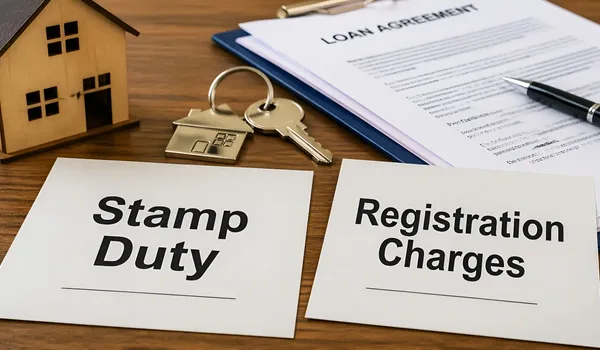
Stamp duty in Karnataka is 5% for property above Rs 45 lakh, with a cess and surcharge that lift the effective rate inside city limits to about 5.65%, while registration is a flat 1% of value. On a Rs 1 crore home that is close to Rs 6.65 lakh, paid from your own funds because a home loan covers only the property value. For the full slab table, the cess breakdown and a worked example, see our home loan and charges guide.
Because the charges scale with the guidance value, always price a shortlisted home against the live Godrej Castillo price list and add the duty and registration on top before you compare options.
Kaveri Online Services and Slot Booking
Kaveri Online Services is the single window for most of the process. You register on the portal, calculate and pay stamp duty and the registration fee, upload the draft deed, and book an appointment at your sub-registrar office. Doing this before you arrive shortens the visit and reduces the queue on the day. Keep the payment reference and slot confirmation handy, as the office checks them against your deed.
On the appointment date, all executants must be present in person, since the officer captures live photographs and biometrics. If a party cannot attend, a registered power of attorney is generally required, and it must itself be valid and stamped.
After Registration: Khata and Encumbrance
Registration transfers ownership, but two follow-up steps complete your records. First, apply for a Khata transfer, also called mutation, at the BBMP or the local panchayat so the property tax record reflects your name; you will need the registered deed and recent tax receipts. Second, obtain a fresh encumbrance certificate, which should now show your purchase as the latest transaction, confirming the title is recorded in your name.
These steps matter for future resale and for any loan against the property, so complete them soon after registration rather than leaving them pending.
How This Applies at Godrej Castillo
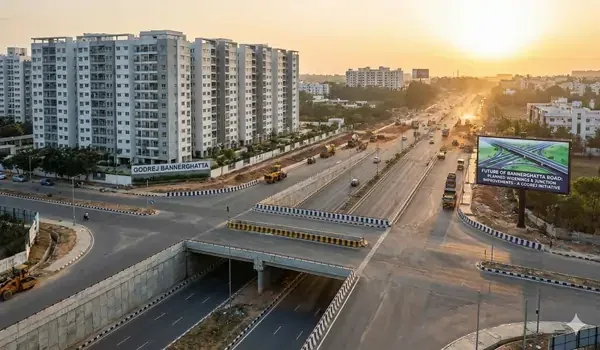
On Bannerghatta Road, Godrej Castillo in Hulimavu is a RERA-tracked project from an established developer, which tends to make the registration trail cleaner for a buyer. The title chain, approvals and RERA details are documented, so your advocate can verify them quickly, and the same Karnataka process applies: pay 5% stamp duty plus 1% registration on the guidance value, book a Kaveri slot, execute the deed at the sub-registrar office, and follow up with the Khata transfer. Booking a site visit lets you check the current price, loan eligibility and registration estimate together.
Frequently Asked Questions
1. Is property registration mandatory in Karnataka?
Yes. Under the Registration Act, 1908, a sale deed for immovable property must be registered at the sub-registrar office. Until it is registered, the transfer is not legally valid against third parties and you cannot get a Khata or a clean resale.
2. Can I register a property online in Karnataka?
Much of the process is online through Kaveri Online Services: stamp duty payment, registration fee, document upload and slot booking. The final execution, however, is done in person at the sub-registrar office, where all parties sign and give biometrics.
3. What are the charges to register a property?
Stamp duty is 5% above Rs 45 lakh, about 5.65% effective within city limits with cess and surcharge, plus a flat 1% registration fee. On a Rs 1 crore home that is roughly Rs 6.65 lakh in government charges, paid from your own funds.
4. How long does registration take?
Once the deed is drafted and stamp duty is paid, the registration itself is usually a single appointment at the sub-registrar office. The scanned deed is available soon after, while the Khata transfer that follows can take a few weeks.
5. What is the difference between registration and Khata?
Registration records the transfer of ownership through the sale deed. Khata is a separate municipal record used for property tax; after registration you apply for a Khata transfer, or mutation, so the tax record reflects your name.
6. Do all buyers and sellers need to be present for registration?
Yes, the executants must attend in person because the officer captures live photographs and biometrics. If someone cannot attend, a valid, stamped registered power of attorney is generally required for them to be represented.
Conclusion
Property registration in Karnataka is a predictable process once you plan it: verify the title, pay 5% stamp duty plus 1% registration on the guidance value, book a Kaveri slot, execute the deed at the sub-registrar office, then complete the Khata transfer and pull a fresh encumbrance certificate. Getting the documents right before the appointment is what keeps it to a single sitting.
To see how the numbers and paperwork work on a specific home, book a site visit at Godrej Castillo and check its current price, loan eligibility and registration estimate together.
Godrej Castillo Blog