NRI Guide to Buying Property in Bangalore 2026
Published 08 Jul 2026 · Last updated 08 Jul 2026
Prices & RERA details verified against the K-RERA portal, July 2026.

A Non-Resident Indian can buy residential or commercial property in Bangalore in 2026 with almost the same freedom as a resident, funded through normal banking channels and, if needed, a rupee home loan. The rules that matter sit under the Foreign Exchange Management Act (FEMA): you may buy homes and offices, but not agricultural land, a farmhouse or a plantation. Everything else is about paperwork, funding routes and tax at purchase and sale.
This guide walks an NRI buyer through eligibility, how to pay, home loans, the tax deducted at source, and repatriating money later, with indicative figures for a purchase on Bannerghatta Road or elsewhere in the city. It closes with where our project, Godrej Castillo by Godrej Properties, fits. Rules and limits revise periodically, so confirm the current position with your bank and a tax adviser before you transact.
NRI Property Buying in Bangalore 2026 — Quick Overview
| Aspect | Position for NRIs 2026 | Notes |
|---|---|---|
| Eligible property | Residential & commercial | Not agricultural land, farmhouse or plantation |
| Funding route | NRE / NRO / FCNR or home loan | Through normal banking channels only |
| Home loan LTV | ~75–80% | Repaid via NRE/NRO account or rent |
| TDS on purchase | 1% if value above Rs 50 lakh | Buyer deducts under Section 194-IA |
| Stamp duty & registration | Same as residents | ~5.65% effective + 1% in city limits |
| Repatriation | Up to USD 1 million / year | From NRO balance, subject to conditions |
Rules and limits indicative, as of July 2026 — confirm the current FEMA position, TDS rate and tax treatment with your bank and adviser.
Can an NRI Buy Property in Bangalore?
Under FEMA, an NRI or a Person of Indian Origin can acquire residential and commercial property in India without prior approval, and there is no cap on how many such properties you may own. The one clear restriction is that you cannot buy agricultural land, a farmhouse or a plantation; those need specific permission that is rarely granted. For an apartment in a city township, this restriction almost never applies.
Because a well-run project keeps the title, approvals and RERA trail clean, buying into a branded development removes much of the diligence burden for someone managing the purchase from abroad. Always confirm the project's registration on the state RERA portal before you pay a booking amount.
How to Fund the Purchase
Payment must move through banking channels in Indian rupees; you cannot pay in foreign currency cash or through a traveller's cheque. In practice, NRIs fund a home from one of three account types, or a mix of them with a loan.
- NRE account: holds income earned abroad, freely repatriable, and commonly used for the down payment.
- NRO account: holds income earned in India such as rent; repatriation from it is capped at USD 1 million a year.
- FCNR deposit: a foreign-currency term deposit that can be used or pledged toward the purchase.
- Home loan: a rupee loan from an Indian bank covers the balance, repaid from an NRE or NRO account or from rent.
Home Loans for NRIs
Indian banks and housing finance companies lend to NRIs against Bangalore property, typically funding up to about 75% to 80% of the value, with the rest as your down payment. Following the norms set by the Reserve Bank of India, the loan is sanctioned in rupees, secured on the property, and repaid through an NRE or NRO account or from the rent the home earns.
Tenures are often a little shorter than for residents, and eligibility looks at your overseas income, employment stability and credit profile. As with a resident purchase, stamp duty and registration are paid from your own funds on top of the loan, so budget them separately.
Power of Attorney and Documentation
If you cannot travel for booking and registration, you can appoint a trusted person in India through a Power of Attorney (PoA) to sign on your behalf. The PoA is usually executed at the Indian consulate in your country of residence and then adjudicated in India. Keep your passport, visa or OCI card, overseas address proof, PAN card and recent photographs ready, since lenders and the sub-registrar will ask for them.
Have a lawyer vet the PoA wording so it grants exactly the powers needed and no more. A narrow, well-drafted PoA protects you while still letting the purchase complete without your physical presence.
Tax, TDS and Repatriation
When an NRI buys a resale property valued above Rs 50 lakh, the buyer deducts 1% TDS under Section 194-IA and deposits it against the seller's PAN; the rate is higher when the seller is itself an NRI, so check the seller's status. Stamp duty and registration are identical to what a resident pays, roughly 5.65% effective duty plus 1% registration within city limits. You can see the full break-up in our home loan and charges guide.
On a later sale, capital gains tax applies, and sale proceeds can be repatriated from an NRO account up to USD 1 million per financial year, subject to taxes being paid and the right forms being filed. Rental income is taxable in India and, on a self-occupied home loan, the same Section 80C and Section 24(b) deductions are available. Confirm your specific case with a chartered accountant.
How This Applies at Godrej Castillo
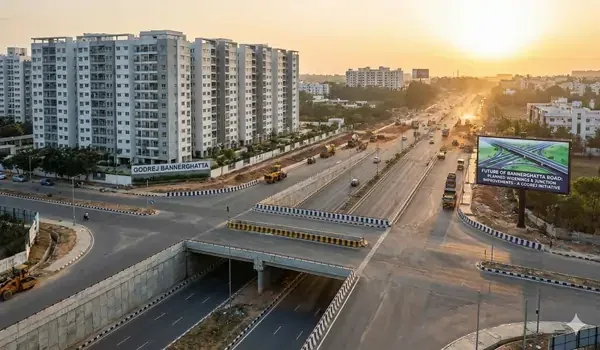
On Bannerghatta Road, Godrej Castillo in Hulimavu suits an NRI buyer who wants a hands-off, well-documented purchase: a RERA-tracked project from an established developer, with a clean approval trail that simplifies loan sanction and registration through a Power of Attorney. Price it against the live Godrej Castillo price list and add duty and registration on top before you compare it with other options.
Frequently Asked Questions
1. Can an NRI buy property in Bangalore in 2026?
Yes. Under FEMA, an NRI or PIO can freely buy residential and commercial property in Bangalore with no limit on the number owned. The only restriction is agricultural land, a farmhouse or a plantation, which need special permission.
2. How can an NRI pay for a home in India?
Payment must move through banking channels in rupees, using an NRE, NRO or FCNR account, or a rupee home loan. Foreign currency cash is not permitted. The down payment usually comes from an NRE account and the balance from a loan.
3. Can an NRI get a home loan in India?
Yes. Indian banks lend to NRIs up to about 75% to 80% of the property value, sanctioned in rupees and secured on the home. The loan is repaid from an NRE or NRO account or from rental income, subject to income and credit checks.
4. What TDS and taxes apply when an NRI buys?
On a resale above Rs 50 lakh, the buyer deducts 1% TDS under Section 194-IA, with a higher rate if the seller is an NRI. Stamp duty and registration are the same as for residents, about 5.65% effective duty plus 1% within city limits.
5. Can an NRI repatriate the money after selling?
Yes. Sale proceeds can be repatriated from an NRO account up to USD 1 million per financial year, once capital gains tax is paid and the required forms are filed. Confirm the current process with your bank and a chartered accountant.
6. Does an NRI need to be in India to complete the purchase?
No. An NRI can appoint a trusted person in India through a Power of Attorney to sign the booking and registration. The PoA is usually executed at the Indian consulate abroad and adjudicated in India before use.
Conclusion
Buying property in Bangalore as an NRI in 2026 is straightforward once the rules are clear: residential and commercial homes are open to you under FEMA, funded through banking channels or a rupee loan, with the same stamp duty and registration a resident pays and a manageable set of tax and repatriation steps at sale. A Power of Attorney lets the whole process run without a flight home.
The safest route is a RERA-tracked project with a clean title and a developer used to NRI paperwork. To see how the numbers and process work on a specific home, book a virtual or in-person site visit at Godrej Castillo and review its price, loan eligibility and documentation together.
Godrej Castillo Blog